
A research group led by Dr. WANG Junfeng from the Hefei Institutes of Physical Science of the Chinese Academy of Sciences has revealed significant physiological and molecular effects of a 7 tesla (T) strong magnetic field on magnetotactic bacteria, based on experiments conducted with the laboratory's superconducting magnet platform.
Their findings were published in Applied and Environmental Microbiology.
Strong magnetic fields are widely used in advanced materials research and 7 T magnetic resonance imaging but may pose unclear biological risks. The complexity of organisms and the lack of known magnetic sensing systems make it difficult to study these effects. Magnetotactic bacteria, which have natural magnetic sensitivity and simple structures, are an ideal model for studying magnetobiological mechanisms.
In this study, the researchers systematically investigated the effects of a steady 7 T magnetic field on Magnetospirillum gryphiswaldense MSR-1, focusing on growth, magnetosome biomineralization, and gene transcription.
The results showed that exposure to the strong magnetic field significantly accelerated bacterial growth and increased the total number of magnetosomes. However, the average crystal size of individual magnetosomes remained unchanged. Transcriptomic analysis further indicated substantial upregulation of genes associated with denitrification enzymes, suggesting that nitrogen metabolism plays a key role in bacterial adaptation to high-field conditions.
Complementary proton transfer reaction–mass spectrometry analysis supported these findings by detecting variations in intermediates, such as NO and N₂O, confirming enhanced denitrification activity under a 7 T magnetic field.
This study provides new experimental evidence of the biological effects of strong magnetic fields on magnetotactic bacteria and highlights the critical role of nitrogen metabolism in microbial adaptation to extreme magnetic environments.
This work was supported by the National Key Research and Development Program of China, the National Natural Science Foundation of China, and the Natural Science Foundation of Anhui Province.

MSR-1 growth acceleration under 7 T magnetic field (Image by MA Kun)
As Staphylococcus aureus becomes increasingly resistant to antibiotics, new methods of killing these pathogens are urgently needed. Now a team of investigators has demonstrated in laboratory rodents that a form of hyperthermia using magnetic nanocrystals, and targeted to ...
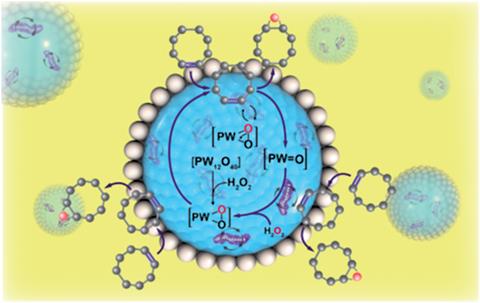
Using bacteria as tiny stirring bars could be a new way to accelerate chemical reactions in droplets. Researchers in China have shown that they can significantly speed up an epoxidation reaction within a Pickering emulsion droplet by using naturally magnetic bacteria to m...

86-10-68597521 (day)
86-10-68597289 (night)

52 Sanlihe Rd., Xicheng District,
Beijing, China (100864)
Copyright © 2002 - Chinese Academy of Sciences


